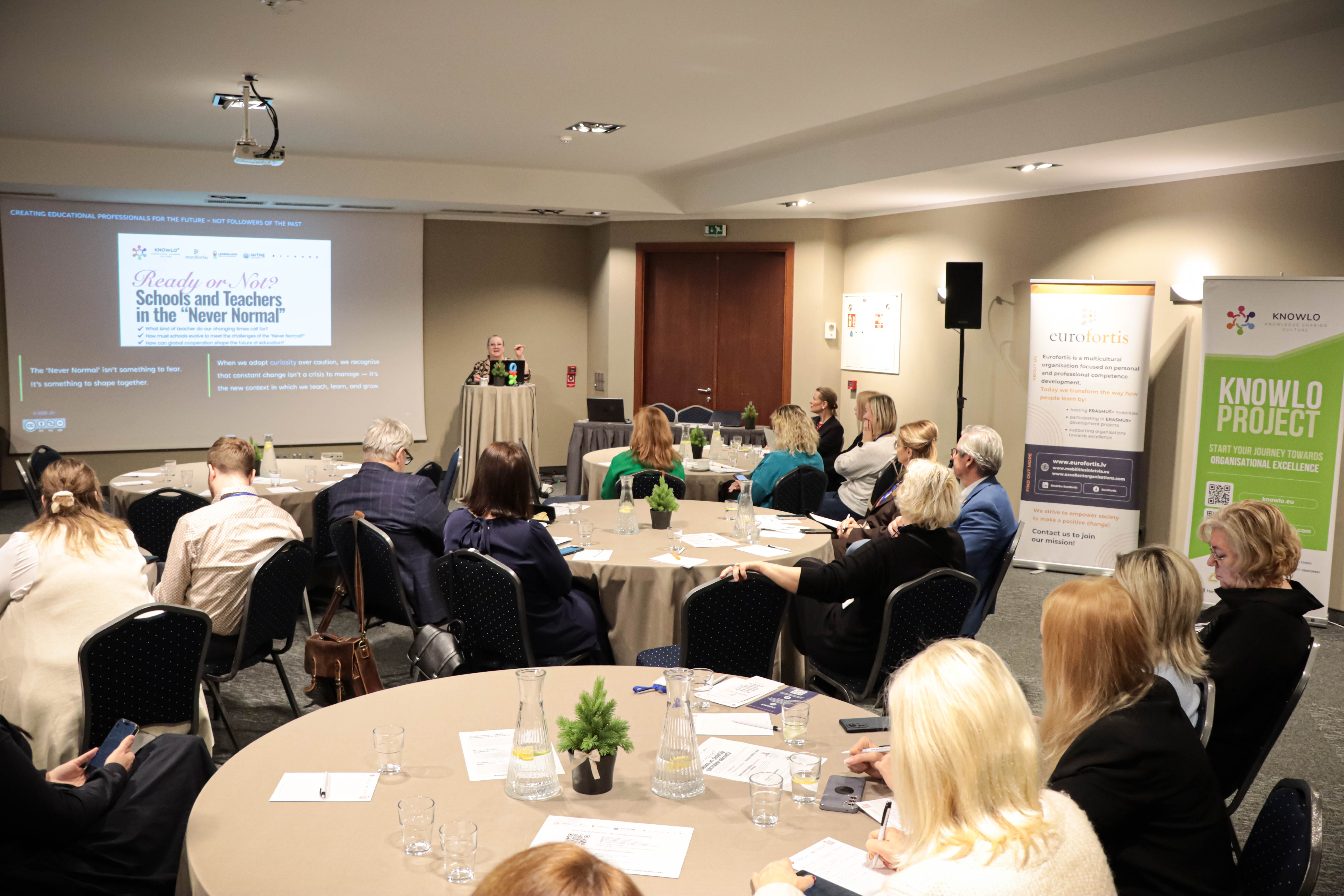
Teaching that inspires: How creativity and technology transform learner-centred classrooms
Education today is evolving faster than ever before. Learners are growing up in a world shaped by digital technologies, artificial intelligence, constant interaction, and immediate access to information. They are curious, connected, and used to active participation in almost every aspect of their lives. Yet in many classrooms, learning still happens in traditional ways that often leave students passive rather than truly engaged.
This creates an important challenge for modern education: how can teachers create learning experiences that truly inspire?
Within the NELCA project, educators and partners from several European countries explored this question through collaboration, innovation, and the development of learner-centred educational approaches. The learner-centred approach shifts the focus from what the teacher does to what the student experiences, from teaching to learning, from content delivery to students engagement. It promotes active participation, collaboration, reflection, emotional connection, and the evolving role of the teacher as a facilitator of learning.
Designing courses that inspire
The rapidly changing educational landscape has encouraged educators to rethink traditional teaching practices. Teachers today need more than digital skills and innovative methodologies — they also need support in creating classrooms where students actively participate in the learning process.
This inspired the development of a new set of courses within the NELCA project — courses designed to support what we call “teaching that inspires”.
The trainings aim to help educators explore learner-centred methodologies, strengthen creativity in teaching, and integrate technology in meaningful and pedagogically grounded ways. Rather than focusing only on tools and theory, the courses focus on transforming the overall learning experience for students.
Designed as practical, interactive, and reflective learning experiences, the trainings encourage participants to experiment, collaborate, exchange ideas, and reflect on their own classroom practices. Teachers themselves becоme active learners, experiencing first-hand the importance of participation, creativity, and engagement in education.
Throughout the activities, participants explore experiential learning, collaborative methods, project-based learning, reflective practice, and the thoughtful use of digital technologies and AI-supported tools. More importantly, they are encouraged to adapt these approaches to their own educational contexts and student needs.
Piloting & learned lessons
The courses were piloted through collaborative international trainings involving educators from different educational levels and backgrounds. The results were both encouraging and inspiring.
Participants highlighted that the trainings reinforced essential learner-centred values such as empathy, creativity, collaboration, and meaningful engagement. The variety of learning activities, from reflective discussions to practical demonstrations and hands-on workshops, helped teachers connect educational theory with classroom reality.
One particularly important outcome was the increased confidence teachers felt in trying new approaches. Interactive and participatory activities motivated educators to experiment with innovative methods and digital tools in their own teaching practice. Teachers reported feeling more prepared to introduce engaging and student-centred activities into their classrooms.
Perhaps the most meaningful result, however, was something less measurable: a shift in mindset. Teachers began to see themselves not only as providers of knowledge, but as facilitators of learning.
And finally, collaboration itself proved invaluable. The exchange of ideas between educators from different countries, institutions, and educational contexts made the entire process richer, stronger, and more meaningful.
Inspiring the Future of Education
The future of education is not only about knowledge acquisition. It is about inspiration, creativity, collaboration, and meaningful human connection.
A truly unforgettable lesson is not one where students simply listen and memorize information. A lesson becomes unforgettable when students are active, not just listening, but participating. When they are not just receiving information, but creating meaning. When they feel valued and that what they are learning matters. That is what we aimed to achieve with these courses. And that is what “teaching that inspires” is all about.
And most importantly, this courses does not end here. What we have started together is something we truly believe in — something that can grow, evolve, and reach many more educators. Through our IAITME Association, we are opening the door for this experience to continue, to spread, and to inspire. We hope to build a community of educators who are not afraid to rethink their teaching, who are willing to experiment, to reflect, and to grow.
Because inspiring teaching is not a single moment - it is a journey.
And through IAITME, we invite others to join us on that journey.