When Teachers Learn Together: The Story Behind the Network of Excellent ULCA Schools
 Jana Chynoradská
·
7 minute read
Jana Chynoradská
·
7 minute read
Every real change begins quietly. First, there is one teacher who asks a simple question: Could this be done differently? Then another joins. Later, a group of colleagues begins to reflect more deeply on learning rather than teaching. Gradually, a community of people emerges, united by a shared desire – to help others grow while not forgetting their own development. Many schools have been built on this idea, but only a few strive to transform their story into the foundation of a new educational system.
The story of Harmony Academy belongs precisely to that group of schools that have been fighting for their original system of collaboration since their foundation. We have never accepted quick solutions from outside. Instead, we have always searched for answers to the questions of what to do, how to do it, and when to do it within our own team of trainers, teachers, administrative colleagues, and external consultants. It is impossible to calculate the number of hours, days, or months we have spent together analysing, evaluating, training, and engaging in open discussions, through which we gradually improved a system that made sense to all of us.
It was only a matter of time before we invited schools from outside to join this creative dialogue. We began in 2013 together with language schools within the Slovak Association of Language Schools, and in 2020 our journey expanded through collaboration with two universities – the Faculty of Education at the Catholic University in Ružomberok and the Faculty of Management and Economics at Tomas Bata University in Zlín, Czech Republic. These universities assumed a significant role in coordinating the further development of our system and enriched it with important elements from the fields of pedagogy, research, leadership, management, and organisational development. Thanks to this collaboration, the model has gradually evolved into an increasingly attractive, valuable, and high-quality framework for the development of schools and the people within them.
This is how we began to co-create a new concept for the modernisation of education through a learner-centred approach. After two years of successful cooperation and, at times, an almost magical attraction among the majority of those involved, we embarked on our next international project, Creating a Network of Excellent LCA Schools. It was here that our educational ecosystem continued to grow and take shape.
Over the years, a strong international community emerged, bringing together people who sought an answer to one simple question:
How can we create an environment in which everyone learns – students, teachers, mentors, and school leaders alike?
From a Course to a Professional Community
Many educational projects end with the awarding of certificates. Our project began where others usually end. From the very first day, we aimed to create a system that would not be based on one-off training sessions but on long-term development, self-reflection, mentoring, and mutual learning.
At the heart of the project stood the individual – their needs, potential, and unique learning journey. The entire initiative was built upon the LCA TDF (Learner-Centred Approach Teacher Development Framework), which Prof. Gabriela Lojová and I brought into the project as the result of many years of collaboration, research, and practical experience in teacher development in Slovakia. This framework is grounded in the philosophy of the Learner-Centred Approach, for which Prof. Gabriela Lojová serves as the academic guarantor, and connects this philosophy with practical tools for teacher professional development.
Throughout the project, we continued to develop the framework together with our international partners, testing and piloting it across different types of educational institutions and refining it based on the experiences of teachers, mentors, university lecturers, and trainers from several European countries. The result is an internationally validated model of teacher professional development that now serves as a common reference framework for the entire ULCA community.
An integral part of its evolution was the integration of principles of personal development, leadership, and learning organisations, which emerged through more than twenty years of systematic development at Harmony Academy and later at Learn & Lead Innovation.
Today, the LCA TDF no longer belongs only to the project partners. It has become an open framework for schools, universities, language schools, and educational organisations around the world that wish to develop education based on human needs, meaningful relationships, and lifelong learning. This is perhaps one of the most significant legacies of the project – we did not merely create a methodology, but an internationally validated system that can serve future generations of teachers and educational leaders.
Instead of asking, “What should we teach?”, we began searching together for the answer to a different question:
“How can we create the conditions for everyone to learn to their fullest potential?
Project Results
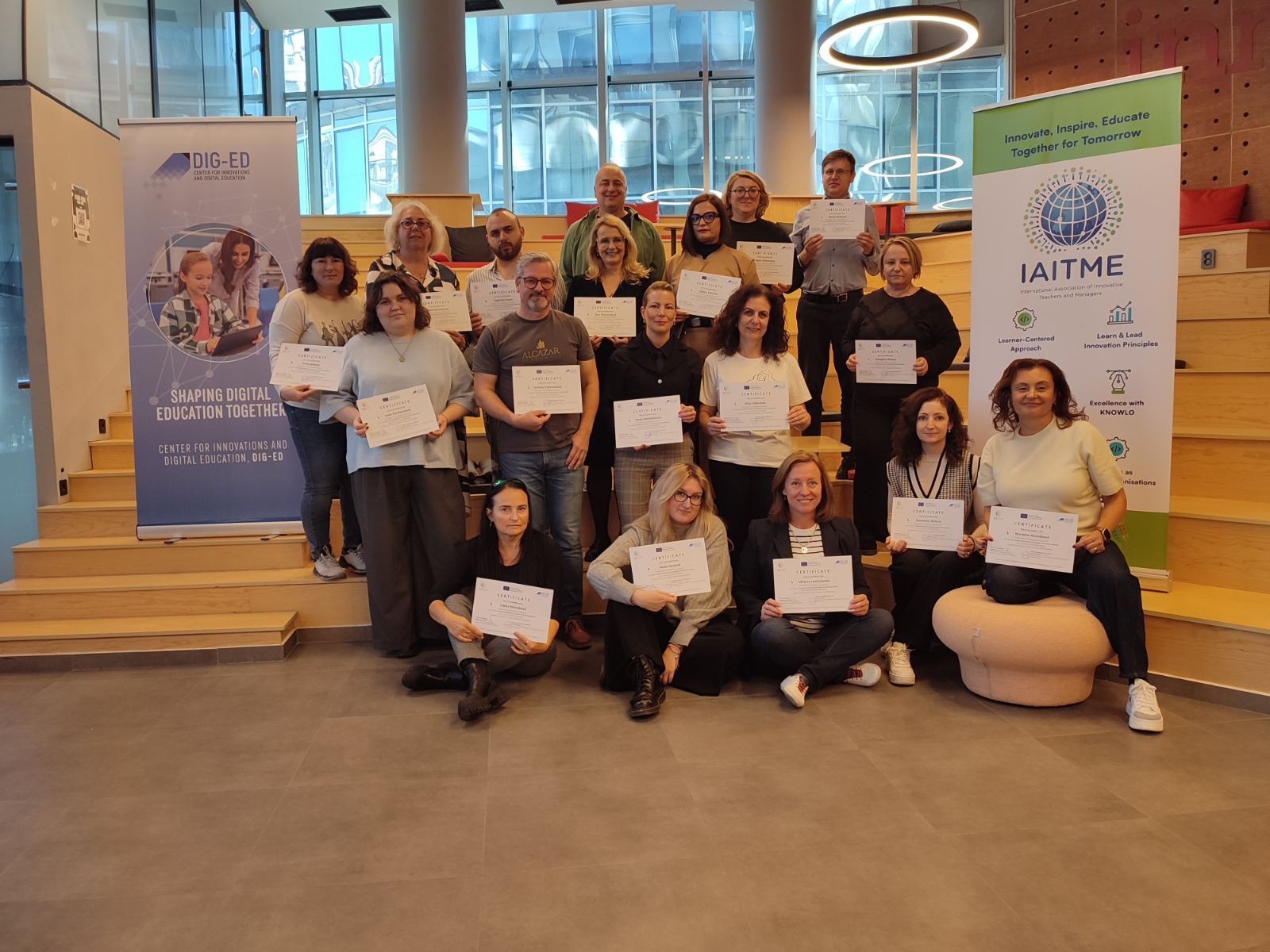
During the implementation of the project, we succeeded in creating a strong international community of teachers and mentors focused on developing education centred on the needs of the learner.
Project Outcomes
- 31 teachers, trainers, and university trainers completed individual mentoring and professional development programmes.
- 11 mentors and trainers accompanied participants throughout their development journey.
- 91 individual professional development action plans were created, forming the basis for concrete changes in teaching and leadership practices.
- Partners from five European countries took part in the project.
- An international community was established, connecting primary schools, secondary schools, universities, language schools, educational organisations, mentors, and teacher trainers.
What Was Created?
Throughout the project, a comprehensive system supporting the professional development of teachers and schools was developed, including:
- a Learner-Centred Approach Teacher Development Centre,
- a mentoring system for teachers,
- digital tools for self-reflection and self-assessment,
- individual professional development action plans,
- methodological materials for mentors,
- examples of good practice from partner organisations,
- an international community of teachers, mentors, and leaders.
These outputs were not created behind a desk. They were developed, tested, and continuously refined based on the real experiences of project participants. This is precisely why they represent practical tools that can continue to be used long after the project has ended.
Individual Action Plans: From Reflection to Change
One of the most important outputs of the project was the creation of 91 individual professional development action plans. Each plan emerged from self-reflection, mentoring conversations, and an analysis of the participant’s own teaching practice.
These were not formal documents. They were personal commitments made by teachers, mentors, and trainers, gradually transforming into tangible changes in teaching, communication, collaboration, and leadership.
What Did Teachers Consider Most Important?
The analysis of all action plans revealed an interesting trend. Teachers were not primarily looking for new techniques and methods. Instead, they placed the greatest emphasis on the quality of relationships, personal development, and creating environments that support learning.
Most Frequent Areas of Professional Development in the ULCA Project
| Rank | Area of Development | Number of Action Plans | Share |
|---|---|---|---|
| 🥇 1 | Teacher’s Role and Relationships with Learners | 30 | 33% |
| 🥈 2 | Active Learning | 15 | 16% |
| 🥉 3 | Meaningful Learning Content | 13 | 14% |
| 4 | Classroom Climate and Relationships | 9 | 10% |
| 5 | Assessment and Feedback | 8 | 9% |
| 5 | Self-development and Professional Learning | 8 | 9% |
| 7 | Cognitive and Emotional Development of Learners | 5 | 5% |
| 8 | Resilience and Stress Management | 2 | 2% |
| 9 | Global Context of Education | 1 | 1% |
| Total | Action Plans | 91 | 100% |
These results clearly demonstrate that modern education is returning to its roots – to people, to relationships, and to supporting the growth of every individual. Teachers increasingly recognise that their role is not merely to transfer knowledge but to create conditions in which personalities can flourish.
Partners Who Made the Difference
The project brought together organisations from different educational sectors. Each contributed its own experience, expertise, and unique perspective on teacher development.
The highest number of action plans originated from:
- Harmony Academy and its partner schools within the Slovak Association of Language Schools – 42
- Mykolas Romeris University, Lithuania – 18
- DIG-ED, North Macedonia – 12
- Catholic University in Ružomberok, Slovakia – 12
- Dobje School, Slovenia – 7
Together, they created an international professional community that became the foundation for further innovation in education.
What Have We Learned?
Perhaps the most important finding of the project was that the quality of a school does not begin with technology, buildings, or textbooks. It begins with people – a teacher who knows themselves, a mentor who can truly listen, and a leader who creates an atmosphere of trust.
The schools involved in the project achieved the greatest progress in the following areas:
- building positive relationships,
- teamwork and collaboration,
- reflection on professional practice,
- active learning,
- developing learner independence and responsibility,
- promoting wellbeing,
- creating a culture of trust and open communication.
Many participants identified the opportunity to pause, reflect on their work, and engage in professional dialogue with colleagues as the most valuable aspect of the project. This space for reflection proved to be one of the most powerful tools for professional growth.
More Than a Project
Although the project is formally coming to an end, its results remain very much alive. A community of teachers, mentors, trainers, university trainers, and educational leaders has emerged and continues to collaborate through IAITME – the International Association of Innovative Teachers and Managers in Education. This association was established as a natural continuation of the cooperation developed among the project partners and builds upon its three core pillars: the Learner-Centred Approach, Learn & Lead Innovation, and the KNOWLO framework for developing schools as learning organisations.
Today, IAITME connects educators, mentors, school leaders, universities, and educational organisations from more than ten countries. The community includes certified ULCA trainers, hundreds of trained teachers, and thousands of learners whose education is influenced by the principles developed through the project. The association supports professional development, international cooperation, the sharing of good practice, research, innovation, and the transformation of schools into modern learning organisations.
What began as the Erasmus+ project Creating a Network of Excellent ULCA Schools has gradually evolved into an international movement of people who believe that quality education emerges wherever not only students, but also teachers, mentors, and leaders continue to learn. This is why the ULCA journey continues today through new projects, conferences, training programmes, mentoring initiatives, and IAITME activities across Europe.
The Future Belongs to Schools That Learn
In times of rapid change, it is no longer enough to transfer knowledge. We need schools that develop character, humanity, relationships, emotional literacy, independence, critical thinking, and the ability to learn throughout life. This was precisely the direction of the ULCA journey – not towards perfection, but towards continuous growth.
Today, at the end of the project, we are no longer speaking only about a network of excellent ULCA schools. We are speaking about a community of people who have realised that the quality of education does not begin with curricula or textbooks. It begins with the teacher.
From a group of 31 teachers, trainers, and university trainers and 11 mentors, a community of professionals has emerged that now influences hundreds of other educators and thousands of learners in their schools and organisations. This is perhaps the project's greatest achievement. We did not merely create methodologies, tools, or action plans. We created a living network of people who are transforming educational culture from within and demonstrating that a school can be a place where everyone learns – students, teachers, mentors, and leaders alike.
Today, we speak about a growing international community of people who are changing the culture of education together. A community that was born through the NELCA project and continues its journey under the umbrella of IAITME. Because the true outcomes of this project are not methodologies, action plans, or training programmes. The true outcomes are the people who have chosen to learn together, grow together, and create schools where learning is a natural part of everyday life.
The story of ULCA is therefore far from over. In many ways, it is only just beginning.